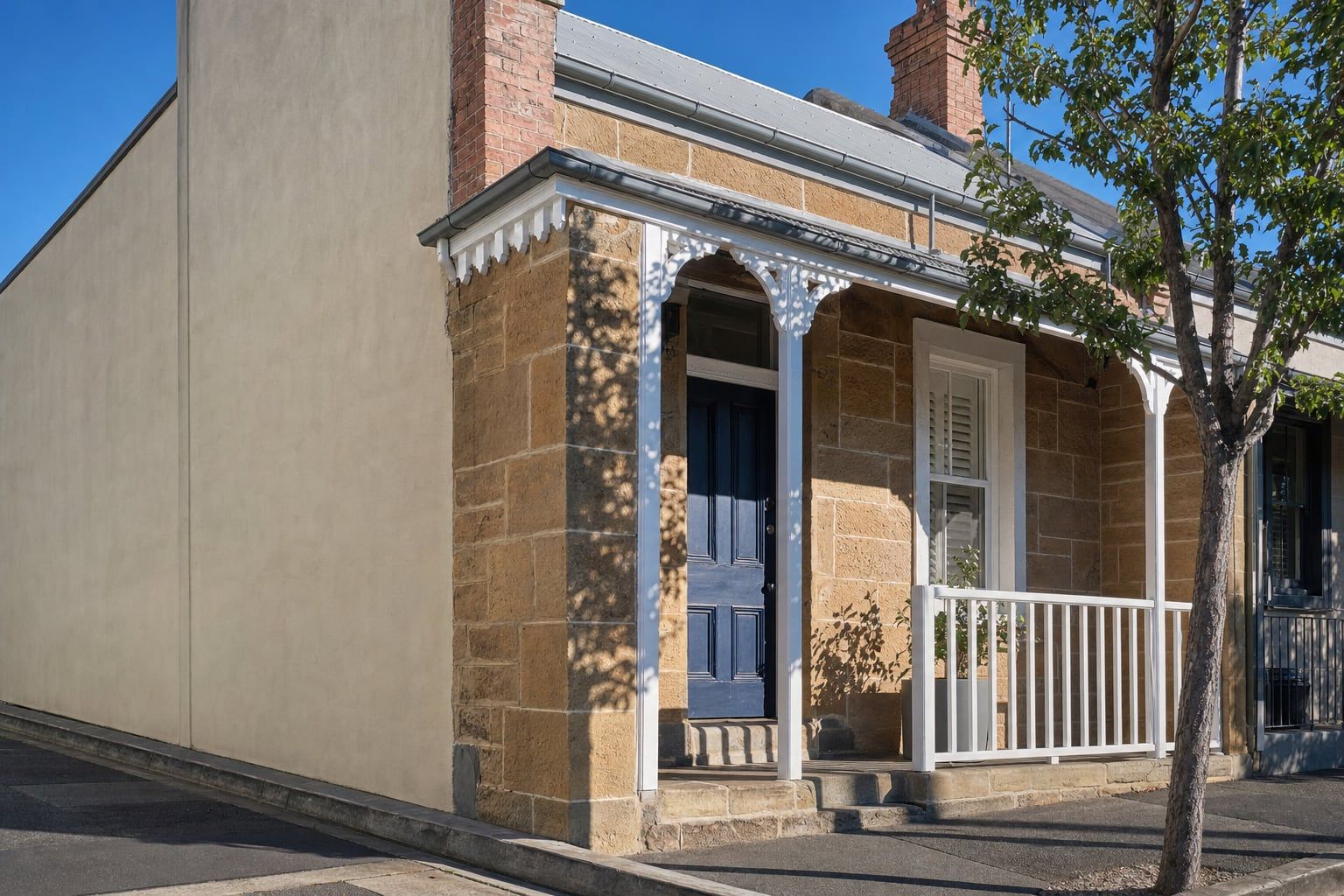
Damp Inspection Inner West
Learn whether it's rising damp, a leak, the ground outside or condensation before anything is quoted.
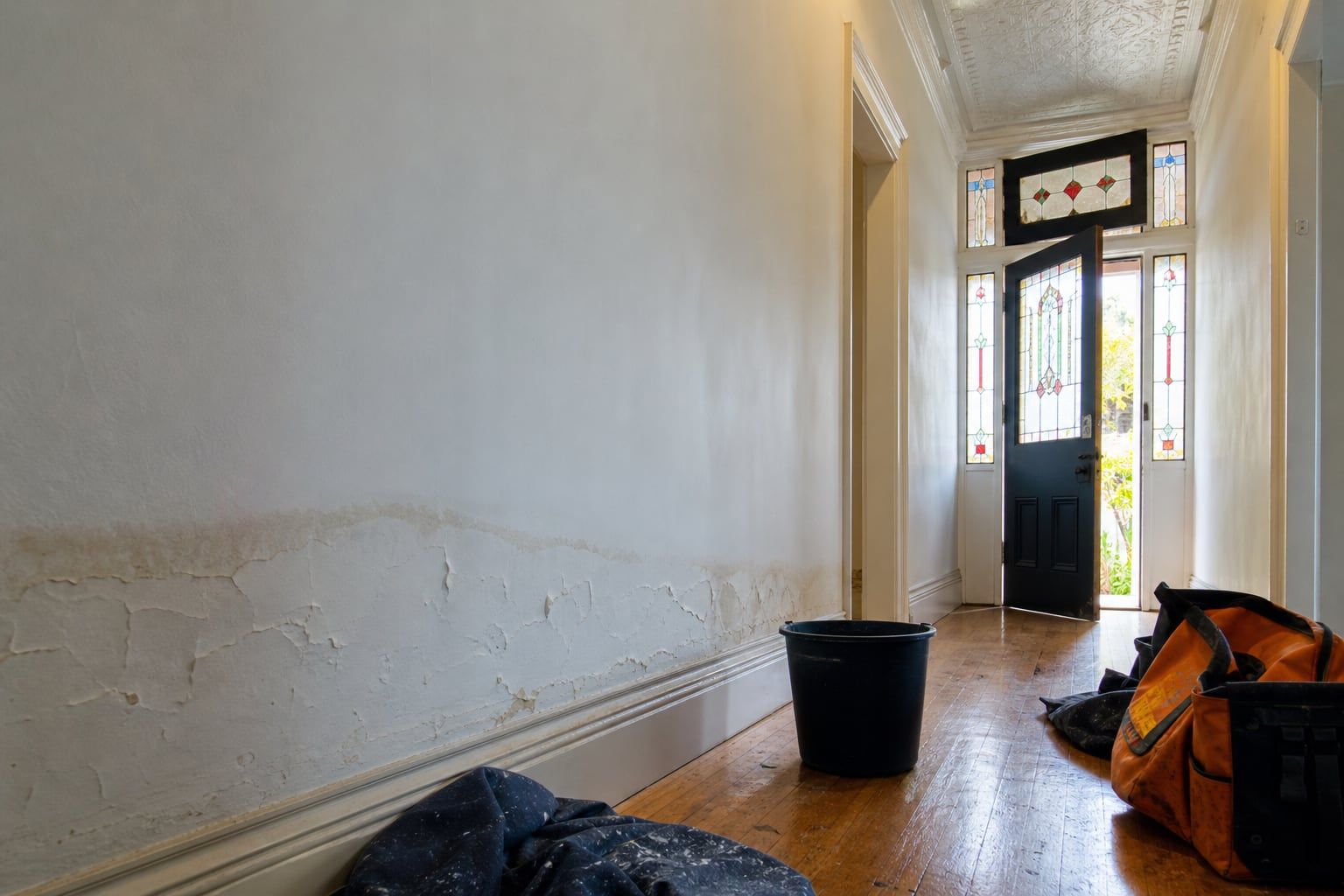
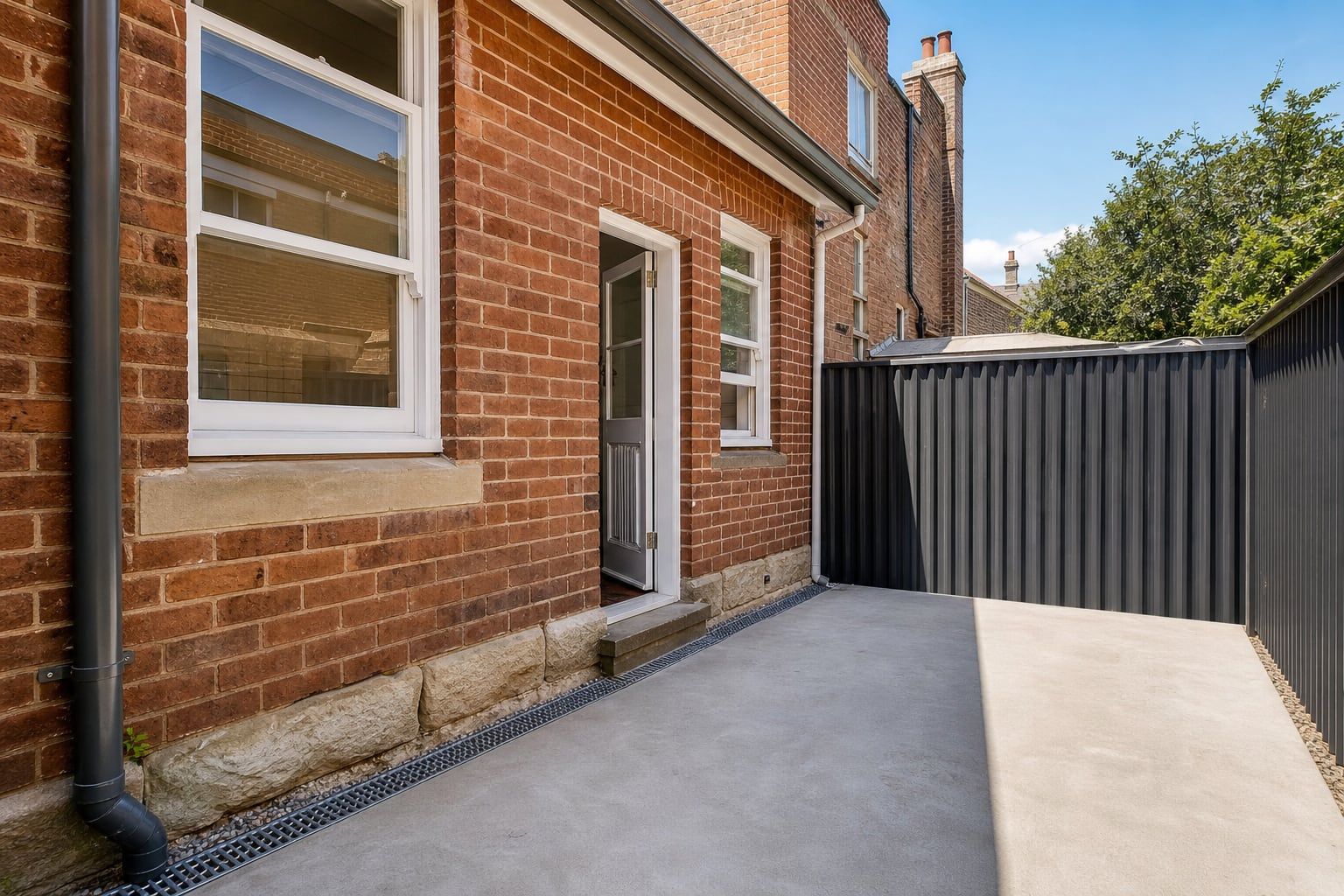
A damp inspection is the most useful hour you can spend on an Inner West damp problem. The suburb’s Federation cottages, brick semis and sandstone workers’ cottages get damp walls for several reasons that all look alike: water rising through an old slate or bitumen course, a courtyard concreted up to the back door, a leaking downpipe, cement render bridging the base of the wall, or condensation in a cold back room. Treating the wrong one wastes money and leaves the damp in place.
So every job here starts with a free moisture check.
What the check involves
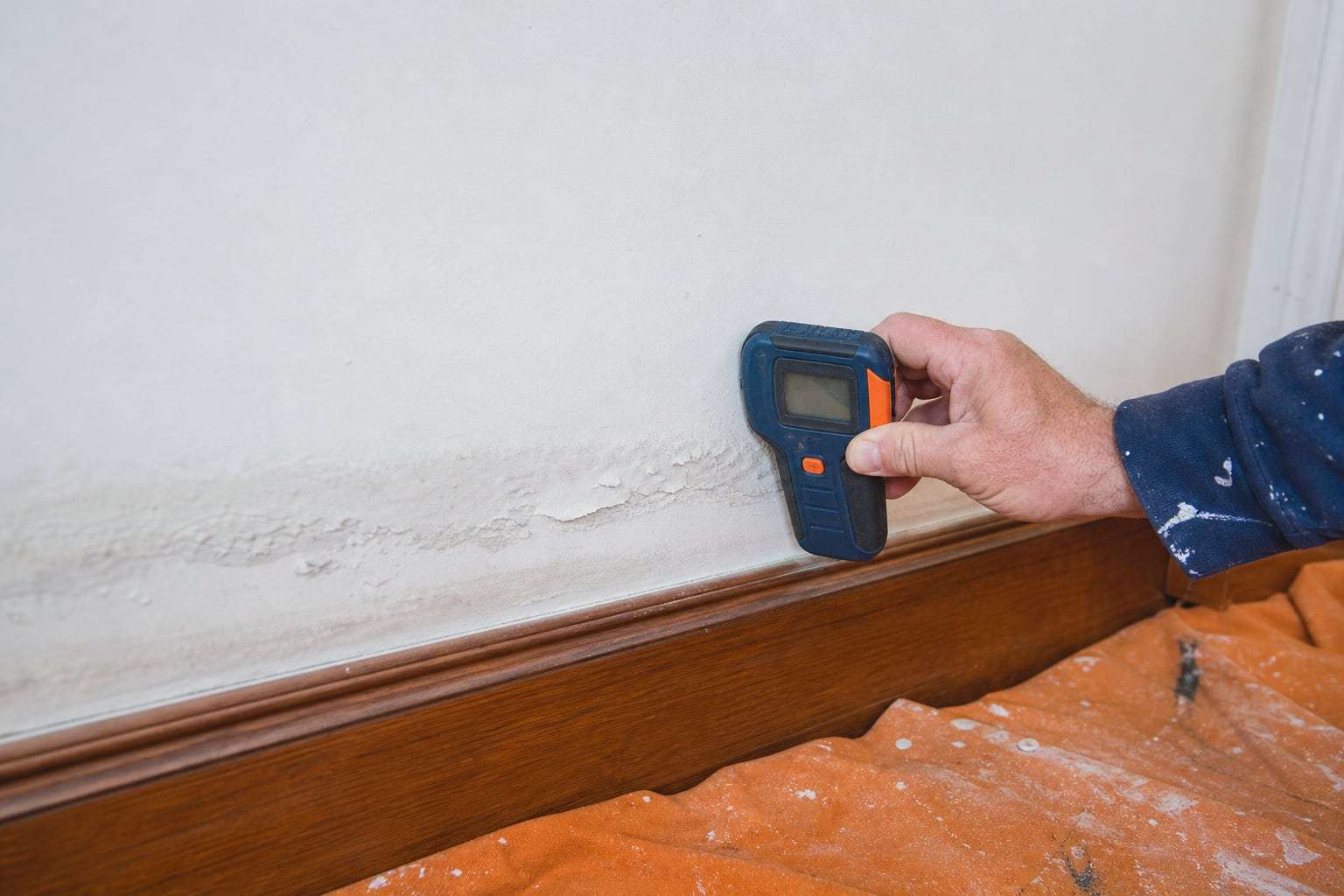
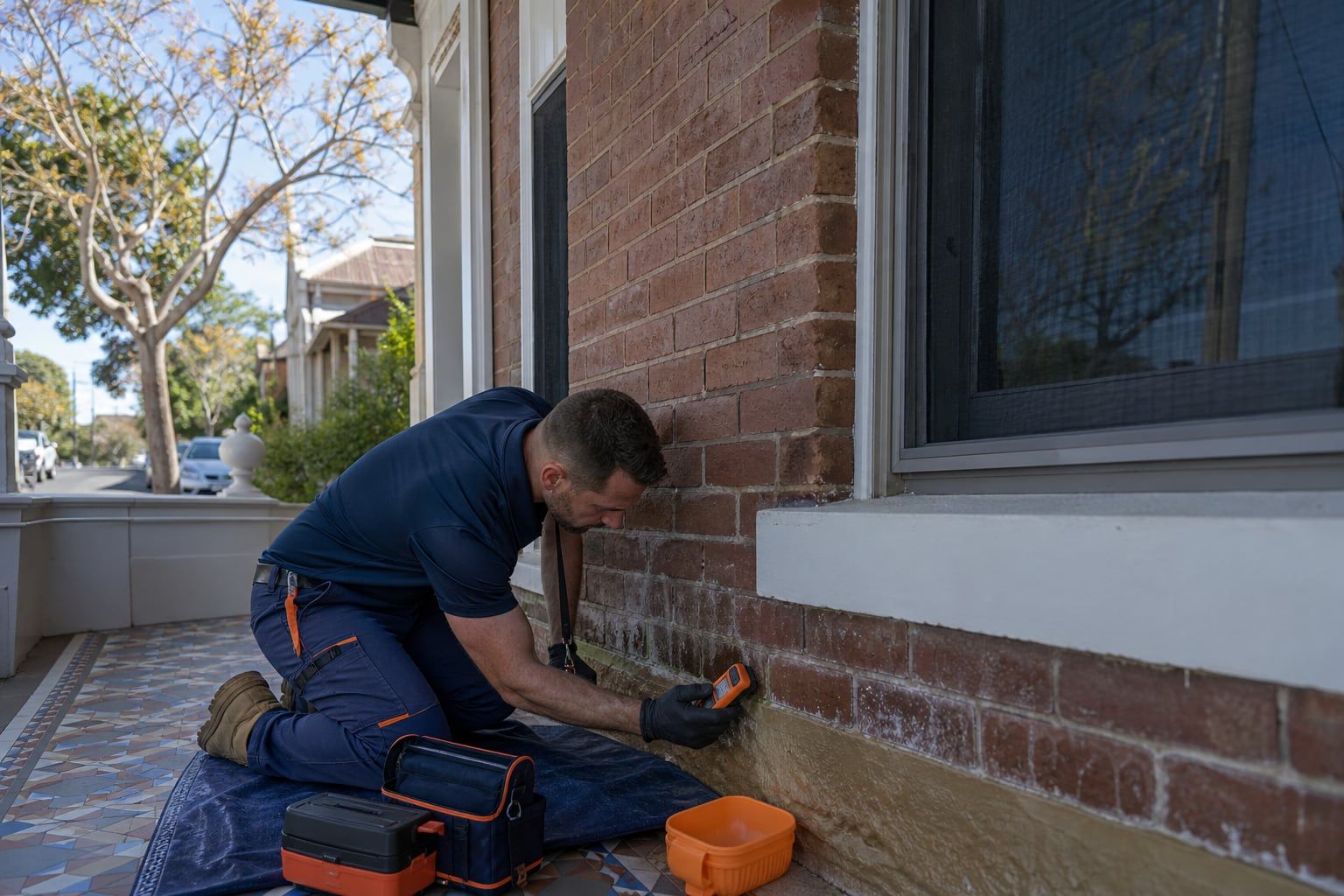
Readings at several heights. We measure each damp wall close to the floor and higher up, and along its length. Rising damp is wettest at the base and fades out somewhere below about a metre, and it’s there in dry weather too. A leak or splashback sits in one spot, often near a downpipe. Condensation shows on cold surfaces such as ceilings, window reveals and corners.
Surface and depth. Salt in old plaster reads as water. Taking readings deeper into the wall separates a salty surface from a genuinely wet wall.
A salt test on the plaster, which shows how long water has been moving through the wall.
Outside. We compare courtyard and path levels with the base of the walls, check whether cement render has been taken down to the ground, look at downpipes, and see whether garden beds sit over the old damp course.
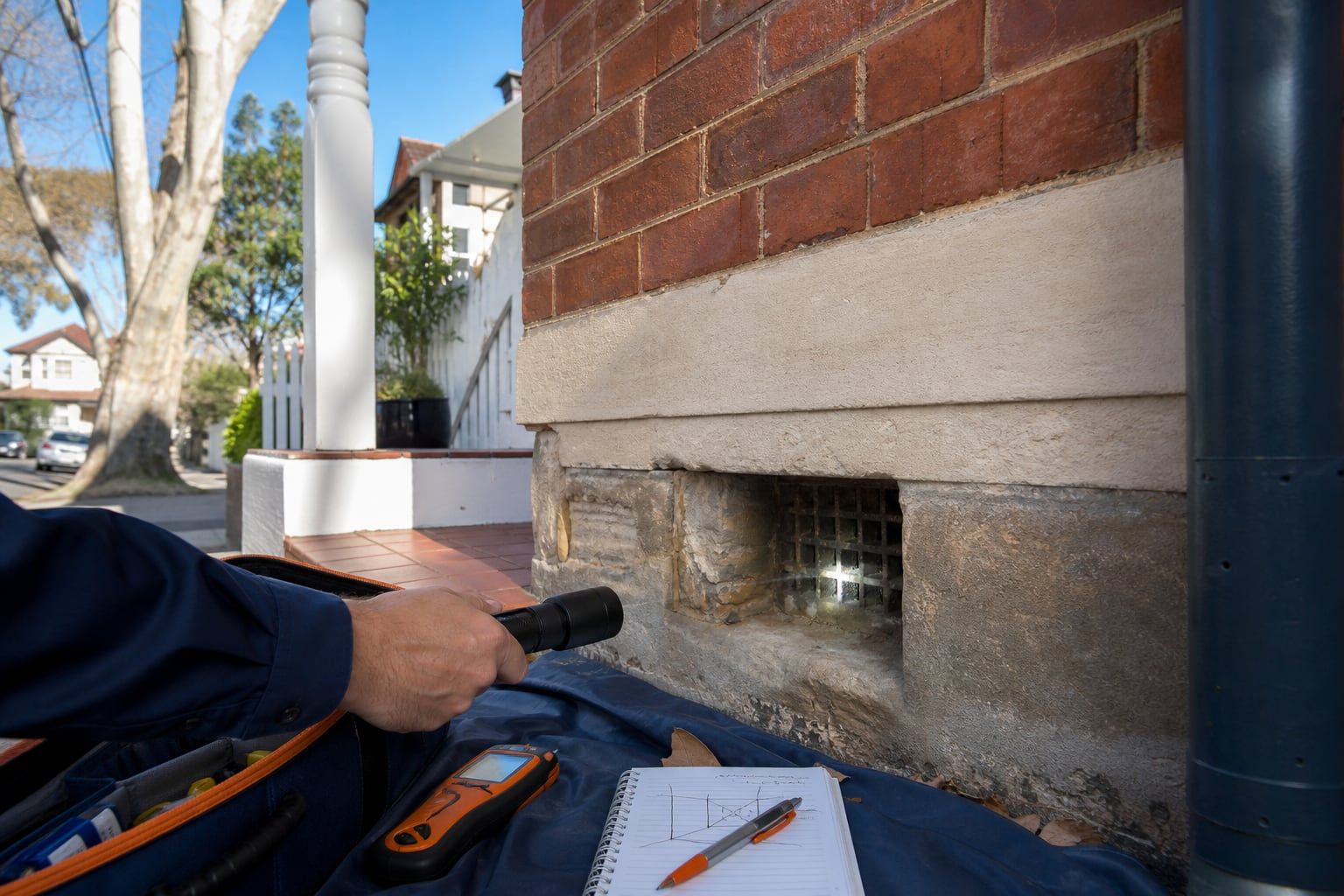
Under the floor. Where there’s a timber floor, we check the soil, the vents and the timber.
What you get
A plain answer before we leave: what’s wetting the walls, which walls are affected, and what would fix them. If work is needed, a written quote follows with each wall, the method and the price, including the plaster repair.
Sometimes the fix is simple: cutting render back above the ground, connecting a downpipe or lowering a garden bed. We’ll say so when that’s all it takes.
Book a check if
- Paint is bubbling or flaking along the skirtings.
- Plaster crumbles near the floor or there’s white salt on the wall.
- The front rooms smell musty.
- Mould keeps coming back in the same corner.
- An earlier damp treatment didn’t work.
- You’re buying an older Inner West home and want to know what’s in the walls.
Stone and older walls
Sandstone cottages around Balmain, Rozelle and Annandale need a different approach to brick. Our guide on rising damp in sandstone walls explains why.
Damp or condensation?
If you’re not sure whether you’re seeing water from the ground or from the air, read rising damp or condensation. If the walls get worse after storms, damp walls after rain covers the usual causes.
Mould
If mould is what you’ve noticed, start with the moisture check. Mould grows where a surface stays damp, and we find what’s keeping it that way. Our mould prevention page explains how we stop it returning. We don’t clean or remove mould.
After the check
If it’s rising damp, our rising damp treatment page explains the repair. For a run-through of each sign, see the rising damp symptoms page.
Terraces and semis
Shared walls are common across Leichhardt, Annandale and Newtown. We read party walls from your side and tell you if the neighbour’s side looks affected as well.
Why it saves money
Many Inner West homes have been injected, repainted or re-rendered over the years without the cause being found. A moisture check that looks at the whole house, inside, outside and underneath, means the next repair is the last one.
Updated
What good damp inspection looks like
Damp Inspection across the Inner West
Damp Inspection in the Inner West: step by step
- Book the checkSend the form with your address and, if you can, a photo of the damp wall.
- Test the wallsReadings at several heights on each damp wall, at the surface and deeper, plus a salt test.
- Check outside and underGround and courtyard levels, downpipes, render near the ground, vents and the subfloor.
- Get a plain answerWe explain the cause before we leave; a written quote follows if work is needed.
Damp Inspection questions in the Inner West
Something else on your mind? Call 02 9158 9931 and ask.
Is the moisture check free?
Yes. There's no charge and no obligation to book any work.
Can you tell rising damp from condensation?
Yes. Rising damp sits low and is there in dry weather; condensation forms on cold surfaces such as windows, ceilings and corners and follows the weather and how the room is used. Readings and where the damp sits make it clear.
Will the check damage my walls?
No. Readings are taken with a meter. Nothing is cut or drilled during the check.